
By Shaliny Lingeswaran
‘Education either functions as an instrument which is used to facilitate the integration of the younger generation into the logic of the present system and bring about conformity to it, or it becomes ‘the practice of freedom’, the means by which men and women deal critically and creatively with reality and discover how to participate in the transformation of their world’ .
-Paulo Freire
Diversity, equity and inclusion, systemic racism, social justice, accessibility, advocacy, barriers, belong, bias, discriminated, disabled, diverse, disparity, inclusive, underrepresented, underprivileged, trauma, women.
These are a few from a long list of words that I may have to avoid were I to write in a different context. I urge the reader to contemplate how the already ineffable language becomes politically filtered, the diversity in knowledge suppressed, how the integrity of understanding and description of reality are slowly becoming not the norm, but a privilege depending on one’s geopolitical positioning.
As a student from a forced displaced background, my first two weeks in Cambridge studying medicine were filled with self doubts about my right to remain there, and vivid dreams about me getting expelled – surely there had been a mistake. My fears were not simply speculative. Globally, refugee access to higher education remains critically low. As of 2025, only 9% of refugees are in higher education. The barriers to access are endless. Financial barriers, structural barriers, contextual barriers and numerous personal barriers. Even though I was admitted into the university on a merit basis, knowing that fact did not stop me from doubting my entitlement to be here. Most of my anxieties arose from the reality that I did not see anyone from my background,being where I am, doing what I am doing. I know that education is the most impactful gift I will ever receive, yet that feeling of gratitude coexisted with a constant feeling of despair.
As we mark World Access to Higher Education Day (WAHED), our focus often rightfully turns to the barriers that prevent one from entering universities: the cost, documentation, English language requirements, information about opportunities, mental and physical health… However, access is only the beginning of a much broader story. True equity in higher education means moving beyond simply opening doors, towards ensuring that everyone who enters higher educational spaces can belong, participate and influence.
Inclusion can sometimes amount to little more than tolerance; being “allowed” to exist in a space without being truly seen or heard. Belonging by contrast, invites individuals as equal partners, with an audible voice in shaping the spaces they inhabit.
The Higher Education (Freedom of Speech) Act, 2023 actively protects and promotes freedom of speech. It urges universities and colleges to take reasonable practicable steps to ensure that freedom of speech is secured for staff and students, even when the views may be controversial. At its best, the Act reaffirms that higher education should be a place where ideas can be questioned, received wisdom tested and diverse perspectives openly exchanged. While the Act addresses freedom of speech, the deeper challenge remains one of belonging. Freedom of speech does not translate into being heard, valued or being able to influence the structures of power within a university. Without a sense of belonging, students from forced displaced backgrounds will not be able to exercise their right to free speech.
True belonging requires individuals to be welcomed as equals. To foster true belonging, universities’ work does not stop at admitting students from underrepresented backgrounds. Universities have a responsibility to transform themselves, to expand their systems to value the full range of perspectives we bring.
The West imagines widening participation as fitting more people into pre-existing structures, resulting in educational monoculture, one where ‘diversity’ is measured by presence rather than influence. The reimagination of an educational ecosystem – where multiple ways of knowing, learning and leading can coexist and enrich one another – is needed. For people from marginalised, forcefully displaced or underrepresented backgrounds, the difference that belonging makes is immensely profound.
As people with an experiential epistemology vastly different to the average British student, we embody a deep contextual understanding, critical perspective that challenge assumptions and adaptive problem solving skills acquired through navigating complex lived realities. We must be unhindered in the opportunity to assemble these unique offerings for more people to rise in solidarity and to foster community and belonging.
One of my most beloved teachers who has been teaching underprivileged demographics of students, told me that a lot of [these] kids are invisible and so, she tries to let them know that they are seen because it gives them a sense of value and worth that shapes the kind of adults they become. This simple act of acknowledgment, for me, is the foundation of epistemic humility and shared power.
It was only when I encountered role models: teachers, mentors and friends with very different contexts to mine, showing up for me and wanting me to succeed that I began to see a path forward. Role models do more than inspire – they transform aspirations into tangible actions. They remind us that access to higher education is not just about individual effort, but also about the presence of those who pave the way, challenge societal limitations and advocate for change. The complication is that the role models are so scarce, which makes attending university feel inaccessible and isolating. Universities who are by their nature sanctuaries must integrate mandatory training that focuses on these systemic hindrances, equipping staff to recognise, to understand and actively counter the barriers that prevent us from fully participating and belonging. Such training ensures that institutions do not only tolerate diversity but foster environments where all students can thrive and influence change.
As forcibly displaced people, we have lost our homes, our families, our friends, and so much more than words can articulate. We become stateless, homeless. But remember: we are also citizens of this earth, and we have a right to occupy space in the world, even if artificial borders dictate otherwise. So my call is this: make intentional space for us in higher education, for when academia becomes our home, we claim it with joy, pride, and the certainty that our presence matters.
Dedication
This article is dedicated to Nikki Nicolau, my English teacher, whose guidance continues to shape who I am, and to all educators who nurture both intellect and empathy in their students.
Author Bio
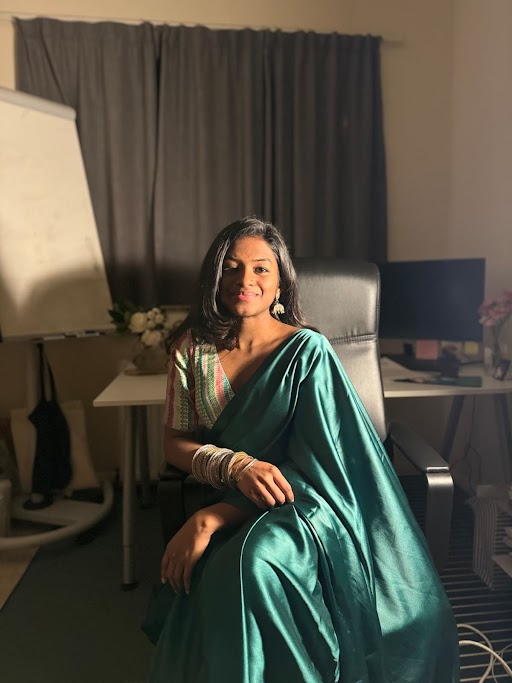
I am Shaliny Lingeswaran, a second year student reading Medicine at the University of Cambridge and an Equal Access Advocate with Student Action for Refugees (STAR). Having experienced forced displacement myself, I am deeply committed to improving access to higher education for students from forced displaced backgrounds. When I am not in lectures or in the dissection room, I love painting and hiking.
You must be logged in to post a comment.